What is SEO and how it works

Today, when we look for an answer to a question, an idea, a product, or a service, the first thing that comes to mind is to turn to a search engine. For example, Google alone processes billions of queries every day. This shows how essential search engines have become in our lives. Moreover, they play a key role in the marketing strategies of many businesses.
What is organic search?
Organic search refers to the results you see in search listings that are not marked as “ads.” These are natural, unpaid results that appear because of the relevance of your website’s content. Organic search has become a powerful marketing tool that businesses leverage through Search Engine Optimization (SEO).
Why is it important?
When SEO is used correctly, your business can achieve higher rankings in search results, which means more website traffic, better brand recognition, and potentially more customers. In this SEO article, we’ll cover everything you need to know to use search engines effectively for growing your business.
What is SEO?
If someone tells you that SEO means “search engine optimization,” that alone isn’t enough to truly understand what it is. Let’s break it down in more detail.
Search Engine Optimization (SEO) is a combination of technical and content-related actions that help website pages align with search engine algorithms. The goal is to make it easy for search engines to find, crawl, and index your content so it appears in search results for relevant queries.
Simply put, SEO is the set of actions that help your website rank higher in Google results and attract more visitors.
Why Google?
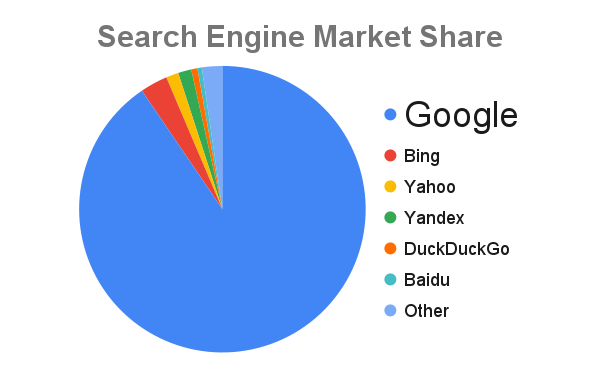
Although Google is just one of many search engines – alongside Bing, Yahoo, and even the built-in search features of social networks (yes, Instagram is also a search engine!) – Google holds about 90% of the market. That’s why, in this article, we’ll use “Google” and “search engine” as synonyms.
So, if you want to attract more customers online, SEO is the place to start.
The benefits and importance of SEO
Every day, millions of people search for information that may be related to your business. These searches can range from general questions to highly specific queries directly connected to your products or services. Such searches open up excellent opportunities: you can help these people, answer their questions, solve their problems, and become a trusted source of information for them.
Key benefits of SEO:
- Increased website traffic
Optimizing your site for search engines boosts the number of visitors. This not only raises brand awareness but also creates more opportunities to engage with your audience. - More customers
Using relevant keywords that your potential customers are searching for helps attract exactly the audience interested in your product or service. This means more high-quality, targeted traffic to your site. - Improved reputation
The higher your website ranks in Google’s results, the more trust it builds with users. When Google “trusts” you, it creates a positive impression among visitors, positioning your site as authoritative. - Higher return on investment
When you invest in building a website, you expect results. SEO increases the effectiveness of your efforts, boosting revenue from your investments and making them truly profitable.
Every day, millions of people search for information that may be related to your business. These searches can range from general questions to highly specific queries directly connected to your products or services. Such searches open up excellent opportunities: you can help these people, answer their questions, solve their problems, and become a trusted source of information for them.
Why is SEO so important?
SEO helps achieve many goals:
- Increase your brand awareness.
- Boost your business visibility online.
- Bring more potential customers to your website.
- Grow sales and build audience loyalty.
SEO is a powerful tool that allows you to appear in front of potential customers at the right moment in their buying journey – whether they are just researching or already ready to make a purchase.
And if your goal is to attract new clients and increase profits, SEO is the path you should take.
How does SEO work?
So, how does Google decide which pages to show in search results (SERPs) for a given query? And how does this affect your website traffic? Let’s take a closer look at how SEO works.
Google’s crawlers are constantly scanning the web, collecting, categorizing, and storing billions of web pages in its index. When you enter a search query and see results, Google pulls from its index-not directly from the live web.
Google then uses a complex formula (algorithm) to rank results based on multiple criteria (ranking factors we’ll cover later), such as content quality, relevance to the query, domain authority, and other parameters.
Next, Google analyzes how people interact with search results. This helps determine how well a page meets user needs, and those signals are fed back into the algorithm.
In other words, SEO works as a sophisticated feedback system designed to deliver the most accurate, trustworthy, and relevant results for each query, using data from you, Google, and users. Your job is to create content that meets Google’s requirements for experience, expertise, authority, and trustworthiness (E-E-A-T), while addressing user needs.
SEO ranking factors in Google
So, what are these requirements? What exactly makes content high-quality, targeted, E-E-A-T-friendly, and SEO-optimized? There are hundreds of Google ranking factors, and the algorithm is constantly evolving to provide the best user experience. However, there are 12 factors you should prioritize:
- Publishing high-quality content
- Keywords in the meta title
- Backlinks
- Niche expertise
- User engagement
- Internal linking
- Mobile-friendliness
- Page loading speed
- Site security / SSL certificate
- Schema markup / structured data
- Keywords in the URL
- Keywords in the H1

Why are even minor factors important?
At first glance, low-weight factors – like keywords in the URL or schema markup – may seem less significant. But remember, there are over 200 ranking factors, and their cumulative effect is substantial.
For example, imagine your website meets all the major factors, but your competitor has also implemented a “small” factor – keywords in the URL, which may carry only 1% weight. The result? That competitor could gain an advantage in the rankings.
Types of SEO
Google and other search engines evaluate your content based on many criteria. That’s why SEO covers different aspects, divided into three main types:
On-page SEO – focuses on the content and structure within your website. Key factors include content quality, use of the right keywords, optimization of HTML tags (headings, meta descriptions, alt tags for images), and internal linking (connections between your site’s pages).
Off-page SEO – involves work outside of your website, such as building backlinks from authoritative sources and improving brand reputation through positive reviews and mentions.
Technical SEO – covers the technical aspects of your site, including security (SSL certificate), user-friendly navigation, page speed optimization, and mobile responsiveness.
In addition to the main types of SEO, there are specialized subtypes:
Local SEO – focuses on promoting a business in local search results and on Google Maps. Important aspects include customer reviews and optimizing your Google Business profile.
Image SEO – targets the optimization of images for search engines. This includes using keywords in file names and alt tags, as well as reducing file sizes to improve page speed.
Video SEO – is aimed at optimizing video content, particularly for YouTube. It includes optimizing titles and descriptions, using keywords in video tags, and building backlinks to the videos.
On-page SEO (internal optimization)
SEO is a complex process where each factor plays an important role in overall success. By optimizing your site according to Google’s key ranking criteria, you not only improve visibility but also create the best possible user experience. In this section, we’ll look in detail at how each factor can help boost your search rankings.
Start with keyword research
The first step is to identify the keywords your potential customers are typing into search engines. Each page should target a specific keyword cluster to avoid competing with other pages on your site.
How to conduct keyword research:
- Create a list of keywords. Think about what words your audience uses, considering their interests, needs, and problems.
- Use keyword research tools. These help you evaluate search volume and competition for each term.
- Focus on keywords with medium search volume and low competition to increase your chances of ranking in the top results.
Create high-quality, keyword-focused content
SEO content must be useful, engaging, and meet user expectations.
Core requirements for SEO content:
- Relevance – the content should match the targeted query.
- Readability – write for people, not algorithms, and avoid keyword stuffing.
- Depth – the content should be informative and detailed (typically 1,500–2,500 words).
- Structure – use headings (H1, H2, H3) to organize information and improve readability.
Strategic keyword placement
Placing keywords in key locations on the page helps search engines understand the content.
Where to include keywords:
- Page heading (H1)
- Title tag (SEO title)
- Meta description tag
- H2 and H3 subheadings
- Main body text
- URL
- Image alt texts and file names
Optimize headings
Headings should be concise, informative, and include the target keyword.
Tips for optimizing headings:
- Title tag: Keep it within 55–60 characters and start with the keyword.
- H1: Make it unique and descriptive of the page’s main topic.
- Heading hierarchy: Use H2 and H3 tags for subtopics.
Optimize the meta description
The meta description is a short summary of the page that appears under the title in search results.
How to optimize descriptions:
- Include the primary keyword.
- Write persuasive text (155–165 characters).
- Add a call to action.
Add and optimize images
Images make your content visually appealing and can drive traffic through image search.
Image optimization for SEO:
- File name – use keywords separated by hyphens.
- Alt text – describe the image content using the keyword.
- Compression – reduce file size to speed up page loading.
Internal linking
Links help both search engines and users navigate your content. Link to other pages on your site to create a logical structure and distribute authority.
Off-page SEO (external optimization)
Off-page SEO includes all the actions you take outside of your website to improve its rankings in search engines. The focus is on strengthening your site’s authority through external sources such as other websites, social media, and online communities.
Build backlinks
Backlinks are one of the key ranking factors in Google. The more high-quality backlinks from authoritative sources your site has, the higher it can rank in search results.
How to get more quality backlinks:
- Publish unique research, analytical articles, infographics, or guides that others will want to reference.
- Reach out to websites where your content would be valuable.
- Write guest posts to share expert materials on other sites and earn backlinks.
- Promote your brand in the media through press releases, interviews, and other PR formats.
Leverage social media
Social media is a powerful channel for distributing your content and driving traffic to your website.
How social media supports SEO:
- Add links to your website in your social media profiles.
- Share blog posts, news, and updates in your feeds to increase visibility.
- Encourage audience engagement with discussions, polls, and calls to action.
Why is it important?
Social media itself is not a direct Google ranking factor, but it helps generate traffic, increase content exposure, and create social signals that contribute to your site’s overall reputation.
Build brand reputation
Google evaluates not only your website but also the overall perception of your brand online. A strong brand reputation has a direct impact on rankings.
How to improve brand reputation:
- Ensure your company is properly listed in Google Business Profile, directories, and relevant platforms.
- Encourage customers to leave positive reviews on trusted sites in your niche.
- Get featured in the news, win awards, or earn press mentions.
- Use monitoring tools to track brand mentions, even those without links.
Off-page SEO for local businesses
For local businesses, positive reviews, high ratings on Google Maps, and active participation in local online communities are especially important. However, these same principles can also benefit brands without physical offices.
Off-page SEO is a crucial part of a successful SEO strategy. Building backlinks, maintaining an active presence on social media, and strengthening brand reputation all work together to boost your website’s authority, visibility, and ability to attract more users through search.
Technical SEO
Technical SEO covers all the backend actions aimed at improving your site so it’s user-friendly, fast, secure, and fully compliant with Google’s standards. The goal is to ensure smooth performance, strong security, and easy crawlability for search engines. Below are the key aspects of technical SEO to focus on:
Page speed
Page load time directly impacts user experience and rankings.
How to improve page speed:
- Optimize image sizes with compression (without quality loss).
- Minify CSS, JavaScript, and HTML.
- Implement lazy loading so images and resources load only when visible to users.
Website security
Your site should run on HTTPS (not HTTP). An SSL certificate not only protects data but also boosts trust and improves rankings.
Mobile-friendliness
Google uses mobile-first indexing, so your site must be fully responsive.
Check:
- Does your content display correctly on different screen sizes?
- Is the site easy to navigate and interact with on mobile devices?
Core Web Vitals
These three metrics measure user interaction quality:
- LCP (Largest Contentful Paint): Time to load the main content.
- FID (First Input Delay): Time from user interaction to site response.
- CLS (Cumulative Layout Shift): Layout stability while loading.
Improving these ensures a better user experience.
URL structure
Clear, organized URLs improve both usability and crawlability.
Recommendations:
- Use descriptive URLs with keywords.
- Avoid long, complex strings.
- Organize content logically, e.g., /blog, /products.
Site structure
Your website should be simple and logical. Users should reach any page in no more than three clicks. Use internal linking to make content easily accessible.
Canonical URLs Canonical tags prevent duplicate content issues by signaling the preferred version of a page to search engines.
Crawlability and indexing
Your sitemap and robots.txt file guide search engines on what to crawl.
Recommendations:
- Ensure important pages are included in sitemap.xml.
- Block duplicate or technical pages in robots.txt.
Structured data
Schema markup helps search engines better understand your content and display rich snippets in search results.
Examples:
- Review markup: Adds ratings or reviews to SERPs.

- Sitelinks markup: Displays additional links to subpages in search results.

- Product markup: Displays prices, availability, and other details.

SEO optimization provides the foundation for effective website performance in search engines. It enhances user experience, makes your site easier to crawl and index, and increases its appeal to search engines. Implementing these technical recommendations will help improve your site’s ranking and ensure reliable performance.
SEO Tools
Effective search engine optimization is impossible without specialized tools. They help you collect, analyze, and interpret the data needed to build a successful SEO strategy. Here are some of the most important tools:
Google Analytics
A free tool for analyzing your website traffic. It lets you track metrics such as the number of visitors, their interactions on the site, and traffic sources.
Google Search Console (GSC)
Provides detailed information about your site’s technical health, page indexing, Core Web Vitals, and the queries users use to find your site.
Keyword research tools
These help you discover relevant keywords based on search volume, competition level, and more. Examples include Google Keyword Planner, Ahrefs, and SEMrush.
SEO software
Paid tools such as Screaming Frog or SEMrush offer advanced analytics, including competitor analysis, backlink profiles, and full technical audits.
SEO strategies and tips
Let’s wrap up with some strategies, best practices, and tips to help you make the most of your SEO efforts.
Research keywords
Always analyze the intent behind each query and make sure your content meets user expectations. What you think users are searching for may not match what they actually want.
Be patient
SEO results are not immediate. It usually takes several months of consistent work to see meaningful changes in rankings.
Focus on quality
Prioritize creating helpful and trustworthy content. Google’s algorithms are designed to highlight content that delivers real value to users.
Keep content updated
Review and refresh evergreen content to ensure it stays relevant and continues driving steady traffic.
Track your results
Regularly monitor traffic and user behavior to adapt your strategy and focus on what works best.