ASO basics – how it works and why it matters

In this article, we will share key tips and strategies for successful App Store Optimization (ASO). If you are new to this field or just starting to improve your app’s visibility, this information will help you understand how to increase your app’s ranking, drive more organic traffic, and attract more users on Google Play and the App Store.
App Store Optimization is the key to success for any application. It not only increases conversion on the product page but also drives high-quality organic traffic, which can help reduce advertising costs. In 2024, with more than 3 million apps on Google Play and nearly 2 million on the App Store, competition in this market is extremely high. That’s why optimizing the product page and effectively combining organic and paid traffic are fundamental to the successful growth of apps.
What is ASO
ASO (App Store Optimization) is the process used to improve an app’s organic visibility and conversion rate in app stores, primarily in Apple’s App Store and Google Play.
ASO is a crucial factor for the success of an app’s marketing campaign, both in the short term and the long term. Beyond increasing an app’s visibility in stores and boosting the number of organic installs, it also has a positive impact on the conversion rates of paid campaigns.
By using optimized keywords, metadata, engaging visual elements (videos, screenshots, and icons), localization for each market, seasonal updates, and ongoing optimization, you can achieve high rankings and maintain them.
Benefits of ASO
- Improved app visibility
Users can’t download your app if they can’t find it. So even if your app is great, if it’s hard to discover, you won’t be able to increase the number of downloads. - Attracting targeted users
It’s not enough for your app to simply be found; it needs to be discovered by people who are genuinely looking for something like it. App Store Optimization helps attract exactly those users who search with queries relevant to your app. - Increasing organic app downloads
With a solid ASO strategy, you will gain more organic downloads, and this growth will be sustainable. When people search for terms related to your app, it will appear among the results. Regular optimization helps you maintain high rankings. - Reducing advertising costs
Instead of spending money on advertising, you can save by focusing on organic growth through ASO. This not only reduces costs but also ensures sustainable growth. - Increasing revenue and conversions
There are several ways to monetize apps, such as in-app advertising or in-app purchases. But if your app page doesn’t convert views into downloads, your ad spend will be wasted. ASO helps guide people to your app page and encourages them to download it. - Entering the global market
If your app is available in other languages, you can attract users from all over the world. App Store Optimization will help you take your app to the international level.
How ASO works
In app stores like Google Play or the App Store, people typically discover and download mobile apps through built-in search. An app’s position in search results directly impacts the number of downloads. The higher your app ranks, the more visibility it receives. Higher-ranking apps also tend to get more downloads, since users usually don’t scroll through all search results but stop at the first 10-15. That’s why achieving a high rank is critical to an app’s success.
It’s impossible to reach the top position for every keyword, but a strong app name, subtitle, and icon will help your app get the maximum benefit from organic ranking.
App Store Optimization (ASO) works similarly to Search Engine Optimization (SEO), but there are certain differences between them. ASO is often called SEO for app stores. Both processes share common elements, such as keyword optimization, backlink building, and conversion optimization, but the main differences lie in their ranking factors. ASO is used to optimize mobile apps within app stores, while SEO focuses on optimizing websites for search engines like Google. Google Search relies on hundreds of ranking factors with varying weights, whereas the list of factors for ASO is much shorter, making it easier to pinpoint which ones influence rankings.
Here are the main ASO ranking factors that influence the visibility and success of apps in the stores:
- App name and subtitle
- Keywords
- App description
- App icon
- Screenshots and videos
- Ratings and reviews
- Number of downloads
- Update frequency
- Localization
Now let’s take a closer look at each of these factors to improve visibility, ranking, and user engagement for your app in the stores.
Keyword strategy
Keywords play an extremely important role in app store optimization. They are the main ranking factor in both Google Play and the App Store. The search algorithms of both platforms are designed to display the most relevant results for user queries. User interaction with the app page is an important signal for improving organic ranking, as it demonstrates the page’s high relevance to a specific query. ASO aims to achieve high positions for popular keywords, allowing you to attract as much traffic as possible.
How to choose the best keywords for your app?
This is quite a challenging task that requires a dedicated strategy. You need to consider three factors:
- Search volume: shows how often certain queries are made within a specific period of time.
- Keyword relevance: indicates how well your app matches a specific query.
- Competition level (difficulty): shows how popular a keyword is among your competitors and how difficult it is to achieve high rankings for it.
How to research and prioritize keywords for your app?
The first step is keyword research for the app store. You need to identify words that match your app and have the potential to attract users. Start with your app’s description and the terms that define it.
The second step is competitor and market research. Review the top results in the app store, popular apps in your category, and the keywords they use. Gather as many keywords as possible and filter out the most relevant ones.
Once you’ve analyzed the market and have a clear idea of which keywords you want to use, select only those that align with your strategy.
What is search volume and difficulty for app keywords?
Search volume shows how popular a specific keyword is among users in the app stores, while difficulty indicates how hard it is to rank in the top 10 results for that keyword.
The process of app store optimization and keyword selection takes time. You need to test different keyword variations to find the best combination. Once you do, remember that app stores are not static – user interests change, so you need to constantly monitor search trends and adapt your metadata.
Proper keyword implementation will help increase the relevance and visibility of your app in the app stores.
After updates, it’s important to track results: how your keyword rankings have changed, as well as their impact on key KPIs such as app page visits, impressions, downloads, conversion rate, revenue, and more.
Keep in mind that the main goal of ASO is to improve your KPIs. If keyword rankings don’t deliver the desired results, you need to go back to the beginning and revisit your ASO strategy.
The impact of app ratings and reviews on ASO
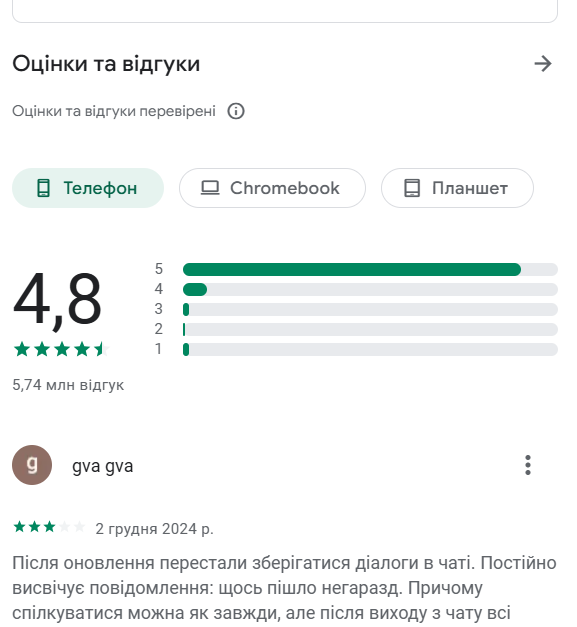
App ratings and reviews have a significant effect on install conversion and are key factors in ASO. Ratings serve as a quantitative measure of your app’s performance, while reviews provide qualitative feedback from users.
Let’s take a closer look at why ratings and reviews are so important for successful app store optimization.
- App ratings are critically important for the algorithms of both Google Play and the App Store. An optimal rating is considered to be 4.4 stars or higher, but of course, the higher the rating, the better.
- Ratings are displayed at every stage of the user’s interaction with the store: in search results, on recommendation pages, in top charts, and more. Most users won’t even consider an app if its average rating is below 4 stars.
- User reviews are important not only for strengthening your brand but also for improving user engagement. By responding to reviews in a timely manner, you show that you care about your users and are ready to address their issues. Positive reviews also create social proof that your app is of high quality.
- Review management is a continuous process that involves analyzing feedback, engaging with users to uncover new keyword opportunities, and encouraging users to rate and review the app. This helps increase user engagement and improves the overall rating.
- Positive reviews also increase the likelihood of your app being featured in special editorial sections of the stores that highlight the most popular apps across different categories.
How visual elements affect ASO
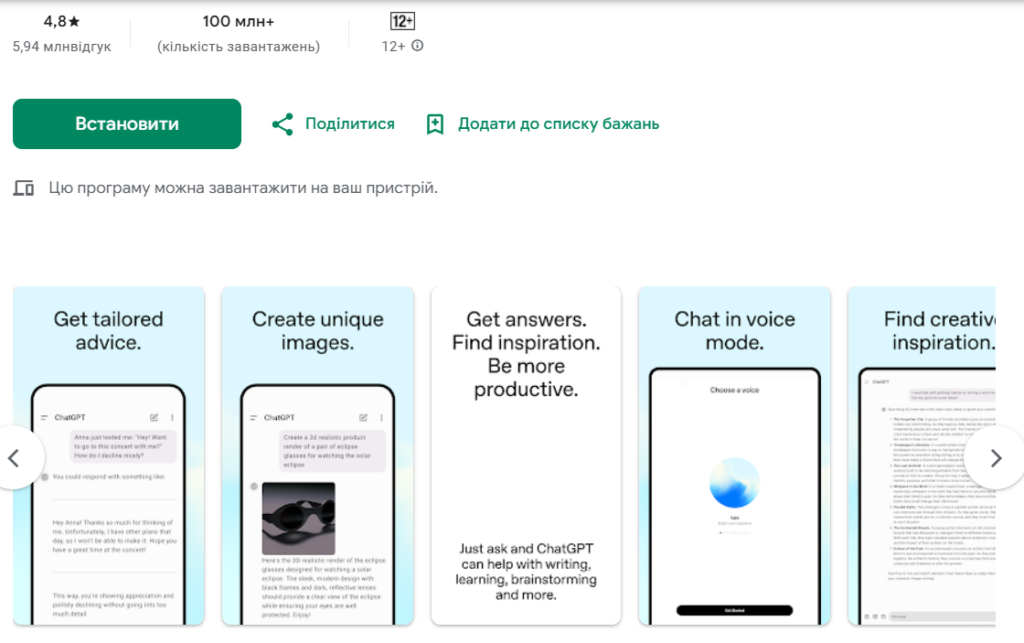
Visual elements in app stores are crucial for increasing conversion rates and attracting users, alongside text elements that handle keyword optimization.
- The app icon is the first element to focus on when launching a new app. It follows the user throughout their journey in the store: in search results, top charts, and on the app page. It’s important for the icon to be distinctive and easily recognizable.
- App screenshots are the second most important visual element for optimizing conversions. In the App Store, the first three vertical screenshots are displayed in search results. Running A/B tests is essential to determine which screenshots are the most effective at boosting conversion rates.
- Promo videos (Google Play) and preview videos (App Store), while optional, often play an important role on the app page by increasing conversions. The video should provide a short (up to 30 seconds) overview of the app, highlighting its key features and benefits. Videos work particularly well for games and more complex apps. Keep in mind that many users watch videos without sound, so it’s best to convey key messages visually.
Seasonality and its impact on app downloads
Seasonality has a significant impact on the success of apps, especially those in categories with seasonal fluctuations in demand.
If you know that seasonality affects your app’s downloads or revenue, you can adapt your ASO strategy by:
- Updating metadata – include relevant keywords related to the season or holidays.
- Adapting visual elements – refresh your icon and screenshots to reflect seasonal themes or moods.
A/B testing in app stores
A/B testing is an essential part of an ASO strategy, allowing you to make data-driven decisions to improve conversions and downloads. The key elements to test are the app icon and screenshots, which can significantly boost the conversion rate when optimized correctly.
Stages of A/B testing:
- Analyze competitors, the market, and your audience.
- Gather ideas for elements to be tested.
- Develop hypotheses for each idea.
- Prepare multiple variations for comparison.
- Create and run a series of tests with different variations.
- Evaluate which versions delivered the best results.
- Improve your app based on the collected data.

How often should you update your app
It’s important to strike a balance between update frequency and effectiveness. Updating the app too often may prevent algorithms from fully indexing new keywords, while infrequent updates may cause you to miss growth opportunities.
It’s recommended to update your app in the following cases:
- Seasonal changes, such as holidays or special events.
- When the conversion rate declines.
- After releasing a new version or completing A/B tests.
App conversion rate
In ASO, the conversion rate is defined as the percentage of users who download an app compared to those who visit its store page. Optimizing this rate is critically important for ASO success.
Importance of the conversion rate:
- The conversion rate shows how appealing your app is to users. If an app has a high conversion rate, it signals to the store algorithms that the app is popular, which in turn improves its organic rankings.
- Since download velocity is an important ranking factor, optimizing the app page to increase conversions will help boost its position in search results.
How to improve the conversion rate:
- Screenshots: These are key elements for delivering information about the app and capturing user attention. They should be high-quality and easy to understand.
- Icon, title, and subtitle: They create the first impression and directly affect the number of clicks from search results to the app page.
- Video: An additional element that can significantly boost conversion, especially for games or apps with many features.
- Text description: While the description has less impact on conversion, it’s important to make it attractive and informative.
Improving the conversion rate directly impacts both organic and paid downloads, making this process a crucial part of any ASO strategy.
ASO tools
Effective ASO is based on data and analytics. To select keywords, measure performance, and build a strategy, the following tools are used:
- Apple Search Ads
An App Store advertising platform that helps discover relevant keywords and evaluate their effectiveness. - App Store Connect
Apple’s tool for managing apps, analyzing downloads, user retention, and performance. - Google Play Console
A platform for managing apps on Google Play with metrics for organic traffic, keywords, and app engagement. - Google Analytics 4
An analytics system for evaluating user behavior and app performance.
Using these tools helps make accurate optimization decisions and grow the app based on analytical data.
Tips for app optimization (ASO)
To wrap up our article, here are some tips for effective app store optimization (ASO) that will help improve visibility, attract users, and achieve success in the market:
- Develop an ASO strategy
Research the market and competitors, study how your audience discovers apps in your category, and identify the most important markets and regions. - Research keywords
Describe your app’s features, find synonyms, and analyze competitors. Use app store search suggestions and ASO tools to generate ideas. - Choose the right name
The name should be unique, clear, and compliant with store guidelines, while also fitting character limits. - Optimize metadata
Write a short description, subtitle, keyword field, and detailed description. Use relevant keywords, avoid restricted terms, and optimize the opening sentences. - Run A/B testing
Create different design and text variations, launch experiments, analyze results, and implement changes. - Prepare screenshots and videos
Visually showcase your app’s key features while following size and layout requirements - Localize your app
Translate metadata for non-English markets, check local keywords, and gradually expand translations. - Improve ratings and reviews
Encourage users to rate the app, respond to reviews, and highlight positive feedback in store listings. - Stay up to date
Track algorithm updates and new technologies, and adapt your strategy to meet new requirements.